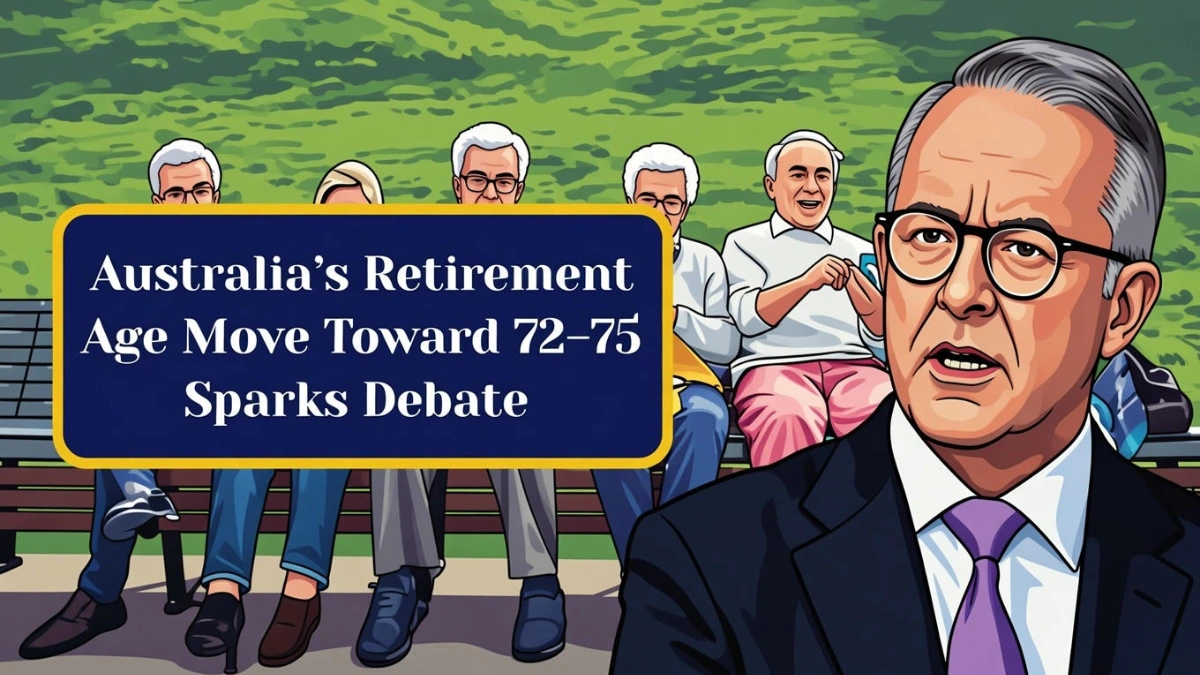
Australia is facing a heated national conversation as retirement expectations drift toward the 72–75 age range, challenging long-held assumptions about when work ends and retirement begins. While no single law has suddenly lifted the retirement age, policy signals, pension eligibility settings, and economic pressures are collectively reshaping how older Australians plan their later years. Experts now say the impact will be felt not just financially, but socially and emotionally as well.
Why Retirement at 67 Is No Longer the Assumed Finish Line
For decades, 67 was treated as the practical retirement benchmark because it aligned with Age Pension eligibility. Today, that assumption is weakening. Longer life expectancy, rising healthcare costs, and pension sustainability concerns mean Australians are increasingly expected to remain economically active well into their early 70s. The shift is gradual, but the message is clear that retirement is becoming a flexible transition rather than a fixed date.
What’s Driving the Push Toward 72–75
Demographic pressure is the biggest factor. Australians are living longer and healthier lives, while the working-age population is growing more slowly. At the same time, superannuation balances for many Australians are not sufficient to fund 25–30 years of retirement. Policymakers and economists argue that encouraging longer workforce participation helps individuals boost savings and reduces pressure on public pensions.
How Age Pension Eligibility Fits Into the Debate
Age Pension access is still governed by age, residency, and means testing, but experts warn that future retirees may need to rely less on the pension and more on personal savings. Even without formally lifting the pension age, tighter means testing and higher living costs effectively push people to work longer before retiring comfortably.
Experts Predict Major Lifestyle Adjustments
Financial analysts and social researchers say Australians approaching retirement will need to rethink how later life looks. Instead of a sudden stop at full-time work, many will move into part-time roles, consulting, or flexible employment. Leisure, travel, and downsizing plans may be delayed, while health and work-life balance become central to decision-making.
Impact on Physical and Mental Wellbeing
Working longer can offer benefits such as social connection and purpose, but it also raises concerns. Not all jobs are suitable for older workers, especially physically demanding roles. Experts caution that inequality may widen, with professionals better able to work into their 70s while others face health-related barriers.
Superannuation Becomes Even More Critical
As retirement stretches later, superannuation planning is taking on greater urgency. Australians are being encouraged to review contribution strategies, investment risk, and drawdown plans earlier in life. The difference between retiring at 67 versus 72 can mean tens of thousands of dollars more in savings, significantly affecting retirement quality.
What This Means for Younger Australians
Younger workers are watching closely, knowing today’s policy signals shape tomorrow’s reality. Many are already adjusting expectations, assuming longer careers and placing greater emphasis on skill development, lifelong learning, and flexible work options that support ageing in the workforce.
Government Position and Policy Direction
Officials stress that there is no sudden mandatory retirement age increase, but acknowledge that long-term sustainability requires change. The broader retirement income framework under the Government of Australia focuses on encouraging workforce participation, strengthening superannuation, and providing safety nets rather than guaranteeing early retirement.
How Australians Can Prepare Now
Experts recommend starting retirement planning earlier, reassessing career paths, and prioritising health. Understanding Age Pension projections, reviewing super balances, and considering phased retirement options can help Australians adapt to a future where retirement is more gradual and personalised.
Key Takeaways From the Retirement Age Debate
- Retirement is shifting from a fixed age to a flexible transition
- Many Australians may work into their early 70s
- Superannuation adequacy is a major driver
- Lifestyle expectations in later life are changing
- Preparation and adaptability are becoming essential
Conclusion: Australia’s quiet move toward a 72–75 retirement reality is reshaping how older Australians live, work, and plan for the future. While the shift promises economic sustainability and longer engagement, it also demands significant lifestyle adjustments. For many, retirement will no longer be an endpoint but a carefully managed phase shaped by health, finances, and choice. Preparing early is now the most powerful tool Australians have to navigate this changing landscape.
Disclaimer: Retirement age expectations, pension eligibility, and policy direction may change based on future legislation and economic conditions. Individuals should rely on current official guidance and professional advice for personal retirement planning.